 3LYNX
Our approach
Model the relationships. Understand the system. Make better decisions.
We start with what connects your system – not just what it contains. We call this Relationship Architecture: understanding how processes, people and technology interact, and how even small changes can make a big difference.
Modular simulation
Each module stays clear. Together they reveal what matters.
Our modular simulations make these relationships visible while keeping models understandable and verifiable. We start small, focusing on the relationships that matter, and expand where it adds value. Each module stays clear. Together, they reveal the system behaviour that matters to your decision. Meaningful insights don’t always require a massive model.
Combining years of industrial experience with current modelling and simulation technologies, we help you explore alternatives, understand trade-offs and make decisions that put your business on course for lasting success.
Stepwise modelling · 3LYNX.CORE
Start small. Expand where it adds value.
A first model does not need a data project. A few stations, average times and one shift are enough for a first answer, and it comes quickly. From there the model grows step by step, only where the decision needs it, and every step makes the answer sharper.
Video description
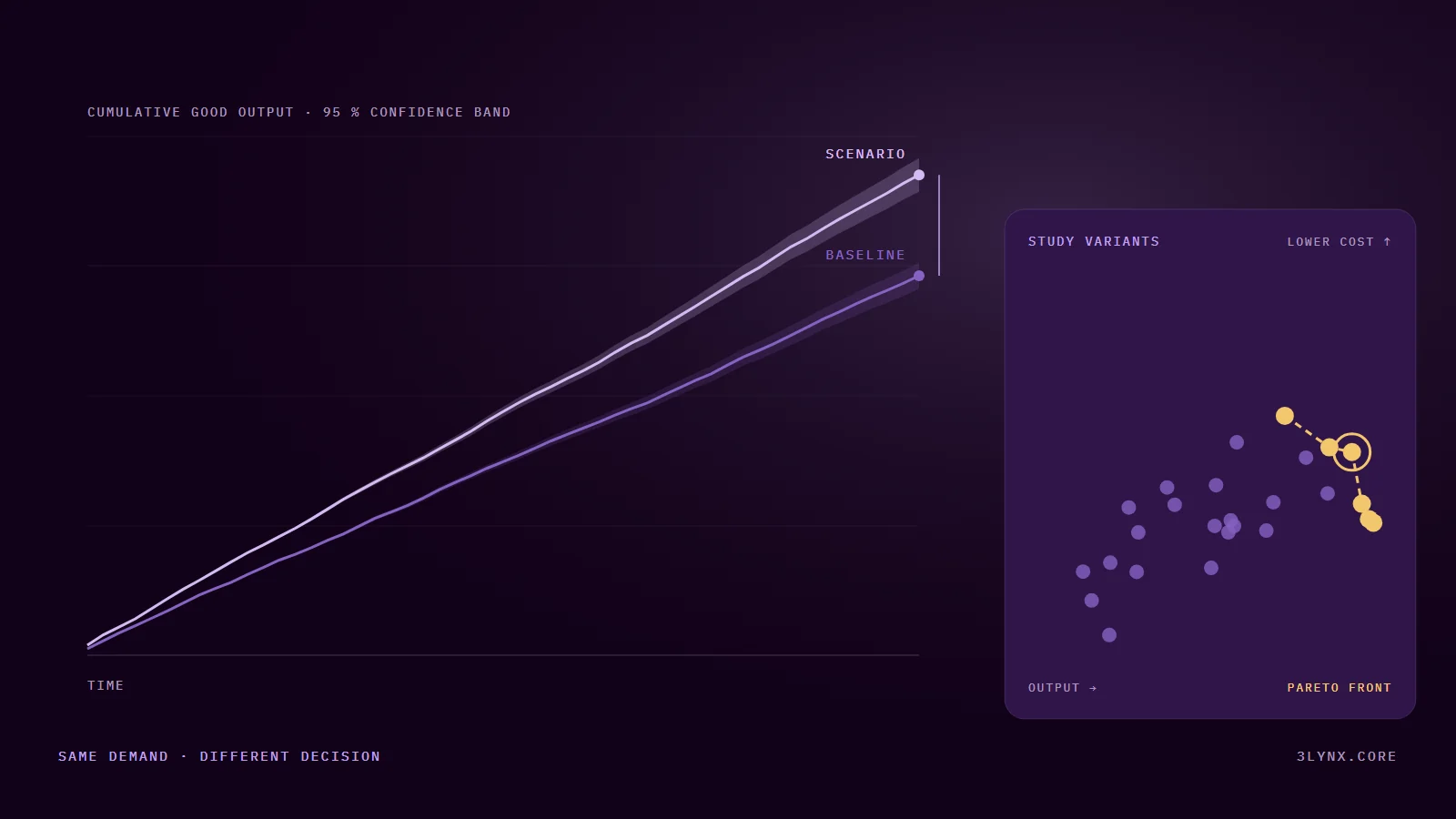
A first simulation model with three stations, average times and one shift gives a first, rough answer for the output per day. Step by step the model gains variability and failures, shifts and workers, transport and layout, tools and carriers, and the range of the answer gets narrower at every step. In the last step three alternatives are compared and the second one is marked as the best option. The figures are schematic. The video has no sound.
- 1 · A first modelA few stations, average times, one shift. Little data, a first answer, and a shared picture of the system.
- 2 · Variability and failuresDistributions instead of averages, failures and repairs. Now queues and waiting become visible.
- 3 · Shifts and workersShift calendars, breaks and the people who run the machines.
- 4 · Transport and layoutDistances on the floor plan, vehicles and transport times.
- 5 · Tools and carriersShared fixtures and workpiece carriers, the resources that often limit a line without showing up on paper.
- 6 · OptimizationOn a model you trust, compare alternatives and find the best option.
Each step stays clear and verifiable. You decide when the answer is sharp enough for the decision, and stop there.
Follow the Lynx
Understand the system. Understand the decision.
Tell us about the decision in front of you. We start small, with the relationships that matter.